Modern Software Architecture, Engineering, and Implementation
Software governs modern infrastructure, commerce, and communication. At its most fundamental level, software is a structured set of instructions, programs, and procedures designed to execute tasks across digital processing units. Behind simple user interfaces lies a layered ecosystem composed of binary machine instructions, operating abstractions, architectural frameworks, and continuous delivery networks. Understanding how modern software is architected, developed, and secured reveals the engineering rigor required to keep contemporary systems stable and scalable.
The Architectural Foundation: Software Types and the Technology Stack
Modern software is categorized by its position relative to physical hardware and end-user workflows. These layers operate cooperatively, passing data up and down standard interfaces.
-
System Software: This layer interfaces directly with hardware components. Operating systems like Linux, macOS, and Windows manage physical resources such as memory, processing cores, and peripheral input/output operations. Device drivers and bootloaders fall within this category, translating low-level electronic pulses into readable operating signals.
-
Middleware: Sitting between the operating system and high-level applications, middleware manages messaging services, API routing, data serialization, and communication protocols. It allows distinct programs running on varied operating environments to exchange data reliably.
-
Application Software: Applications perform discrete operational tasks for end users or organizations. Examples include web browsers, financial databases, video editing tools, and enterprise resource planning software.
-
Embedded Software: Written to run on specialized, non-PC hardware, embedded firmware executes within constrained hardware boundaries. It controls internal logic in automotive electronic control units, aerospace avionics, medical telemetry monitors, and industrial programmable logic controllers.
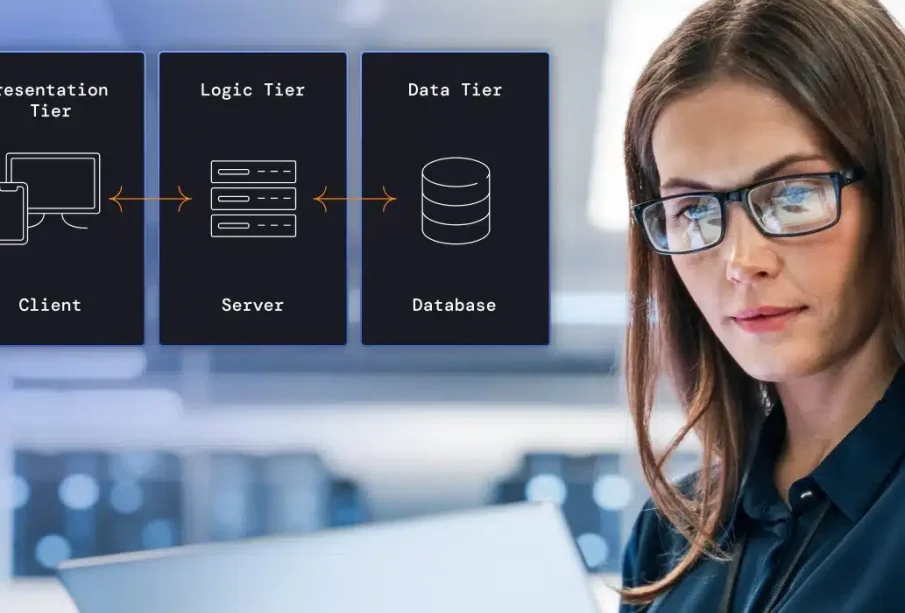
The assembly of software depends on a layered stack containing hardware-level drivers, low-level kernels, system runtime engines, database access layers, business logic controllers, and presentation interfaces. A change at any individual layer can alter performance across the entire chain.
Software Development Methodologies: From Concept to Production
Software engineering teams use structured workflows to transform business requirements into deployable codebases. The choice of methodology directly affects code maintainability, cycle velocity, and testing frequency.
-
Waterfall Development: A linear, sequential engineering model. Analysis, design, coding, testing, and deployment happen in strict non-overlapping stages. This approach works best in strictly regulated fields, such as medical device software or civil aerospace systems, where design criteria cannot shift mid-project.
-
Agile and Scrum: Iterative development models that divide functional roadmaps into discrete sprints, typically lasting two to four weeks. Cross-functional teams refine features progressively, adapting to feedback and shifting technical constraints through continuous reassessment.
-
DevOps Engineering: DevOps integrates software engineering with IT operations. By using automated pipelines, engineers deliver code increments continuously rather than in massive, high-risk releases. DevOps focuses on infrastructure as code, automated continuous integration/continuous deployment, and system telemetry.
Each model requires structured tracking tools, version control protocols, and code review criteria to prevent code decay over extended project lifecycles.
Core Architectural Patterns in Modern Systems
Software architects determine how distinct services, memory pools, and data streams interact. The design pattern directly dictates how well a system withstands sudden load spikes, network latency, and component failures.
-
Monolithic Architecture: All components, including data access, internal business logic, and presentation modules, reside in a single deployable code artifact. Monoliths offer straightforward initial deployment, simple local testing, and low internal latency, but they become difficult to scale across disparate teams as codebases expand.
-
Microservices Architecture: Applications are broken down into independent services organized around specific functional boundaries. Each microservice manages its own persistence store and communicates via lightweight protocols like REST or gRPC. This pattern enables targeted scaling and localized deployments, but it introduces network complexity and distributed data management challenges.
-
Event-Driven Architecture: Decoupled components produce and consume real-time message events via centralized message brokers. When a state change occurs, a service emits an event that downstream consumers process asynchronously. This model prevents system-wide bottlenecks by eliminating synchronous waiting states during processing.
-
Serverless Computing: Developers deploy individual functional units without provisioning or managing underlying operating system environments. Cloud execution engines spin up execution instances on demand, bill exclusively for compute time utilized, and tear down environments upon execution completion.
The Software Development Lifecycle
Developing production-ready software requires a systematic progression through the Software Development Lifecycle to catch architectural and logical errors early.
-
Requirement Analysis: Engineers, architects, and product managers document functional behaviors, throughput requirements, hardware constraints, and compliance mandates.
-
System Design: Architects establish data schemas, network boundaries, interface specifications, protocol formats, and error-handling hierarchies.
-
Implementation and Coding: Developers author the source code using chosen programming languages, conforming to standardized syntax, static analysis rules, and unit-testing standards.
-
Verification and Testing: Dedicated test suites evaluate performance, logical precision, and vulnerability surfaces. Functional checks include integration, load, security, and regression tests.
-
Deployment and Operations: Binaries or containerized images are pushed into staging environments, verified, and promoted to production using canary deployments, blue-green swapping, or rolling updates.
-
Maintenance and Refactoring: Engineers update dependencies, patch identified vulnerabilities, refactor obsolete algorithms, and optimize database queries to sustain long-term operational integrity.
Security Engineering and Quality Assurance
Reliable software requires proactive security testing embedded across the development pipeline rather than tacked on at release. The shift-left movement integrates automated checks directly into local development and continuous delivery pipelines.
-
Static Application Security Testing: Analyzes source code or compiled codebases without executing them, identifying known security vulnerabilities, misconfigurations, or syntax weaknesses.
-
Dynamic Application Security Testing: Evaluates running applications from the outside, testing endpoints against common attack vectors like SQL injection, cross-site scripting, and unauthorized memory access.
-
Software Composition Analysis: Scans third-party libraries and dependencies within the software supply chain to flag vulnerabilities and unmaintained modules before compilation.
-
Observability and Telemetry: Real-time log aggregations, distributed tracing frameworks, and telemetry platforms capture latency, compute saturation, and memory usage patterns. This enables rapid incident response when production systems degrade.
Engineers must also run synthetic integration tests and fuzz testing, which involves feeding random or malformed data into internal functions to catch edge-case crashes before end users encounter them.
Cloud Infrastructure and Deployment Paradigms
Where and how code executes has shifted substantially from on-premises hardware to distributed virtualization platforms.
-
Bare Metal Deployments: Code runs directly on dedicated, unvirtualized physical servers. This provides maximum raw performance and deterministic latency, which is essential for high-frequency financial trading or specialized real-time computing tasks.
-
Virtual Machines: Hypervisors split physical server hardware into multiple isolated virtual systems, each running its own complete operating system instance.
-
Containerization: Container engines package application binaries alongside their runtime dependencies and system configurations, while sharing the host operating system kernel. This makes deployments consistent across developer machines, staging servers, and cloud clusters.
-
Edge Computing: Workloads run close to the physical origin of data generation, such as mobile towers, retail kiosks, or local gateway routers. Edge processing minimizes network latency, conserves backhaul bandwidth, and supports offline operational continuity for mission-critical tasks.
Frequently Asked Questions
How does interpreted code differ from compiled code at execution time?
Compiled software converts human-readable source code directly into native machine code targeting a specific hardware processor before runtime. This step produces fast, standalone binaries. Interpreted software relies on an intermediate interpreter that translates source instructions into actionable machine instructions on the fly during execution, which improves cross-platform portability but generally reduces processing speed.
What is the functional difference between an SDK and an API?
An Application Programming Interface defines the rules, formats, and protocols that allow external systems to communicate with a service. A Software Development Kit is a comprehensive collection of development utilities that includes APIs alongside pre-built code libraries, documentation, debuggers, and compilers designed for a specific hardware architecture or operating system.
Why is technical debt considered an engineering risk rather than just a financial metric?
Technical debt refers to the implied future cost of reworking suboptimal architectural choices or rushed code shortcuts taken during early development. If left unaddressed, technical debt increases defect rates, complicates dependency upgrades, slows deployment frequency, and makes the application harder to secure against new attack vectors.
What role does concurrency play in backend software performance?
Concurrency allows a program to handle multiple operational tasks in overlapping time periods rather than waiting for each transaction to finish sequentially. By using multi-threading, worker processes, and asynchronous event loops, backend software handles thousands of simultaneous incoming connections efficiently without exhausting available memory or CPU cycles.
How does open source software differ from proprietary software in enterprise environments?
Open source software provides public access to its underlying source code, allowing organizations to inspect, modify, and self-host the implementation. Proprietary software retains closed source code under the strict copyright of the issuing vendor, meaning organizations must rely entirely on the vendor for bug remediation, feature development, and runtime security patches.
What is the primary function of an Object Relational Mapper in modern applications?
An Object Relational Mapper bridges application code written in object-oriented languages with relational databases that store data in structured tables. The mapper automatically translates class models and in-memory objects into SQL query commands, reducing the need for raw database query strings while abstracting schema interaction logic from the core business layer.
Why do systems engineers enforce statelessness in web application services?
Statelessness means a service does not retain client session information in its local memory between consecutive requests. Instead, state is passed via tokens or stored in centralized external caches. This design allows load balancers to distribute incoming traffic across any available server instance without losing user context, making horizontal scaling and failover straightforward.